LEAD PRODUCT DESIGNER
Regulation gaps provided an opportunity to refresh.
Project brief
USAA was materially behind on updated Zelle network rules and was already incurring millions of dollars in ongoing fines. At the same time, member satisfaction with Zelle was declining, enrollment completion was weak, and the experience lagged behind major competitors.
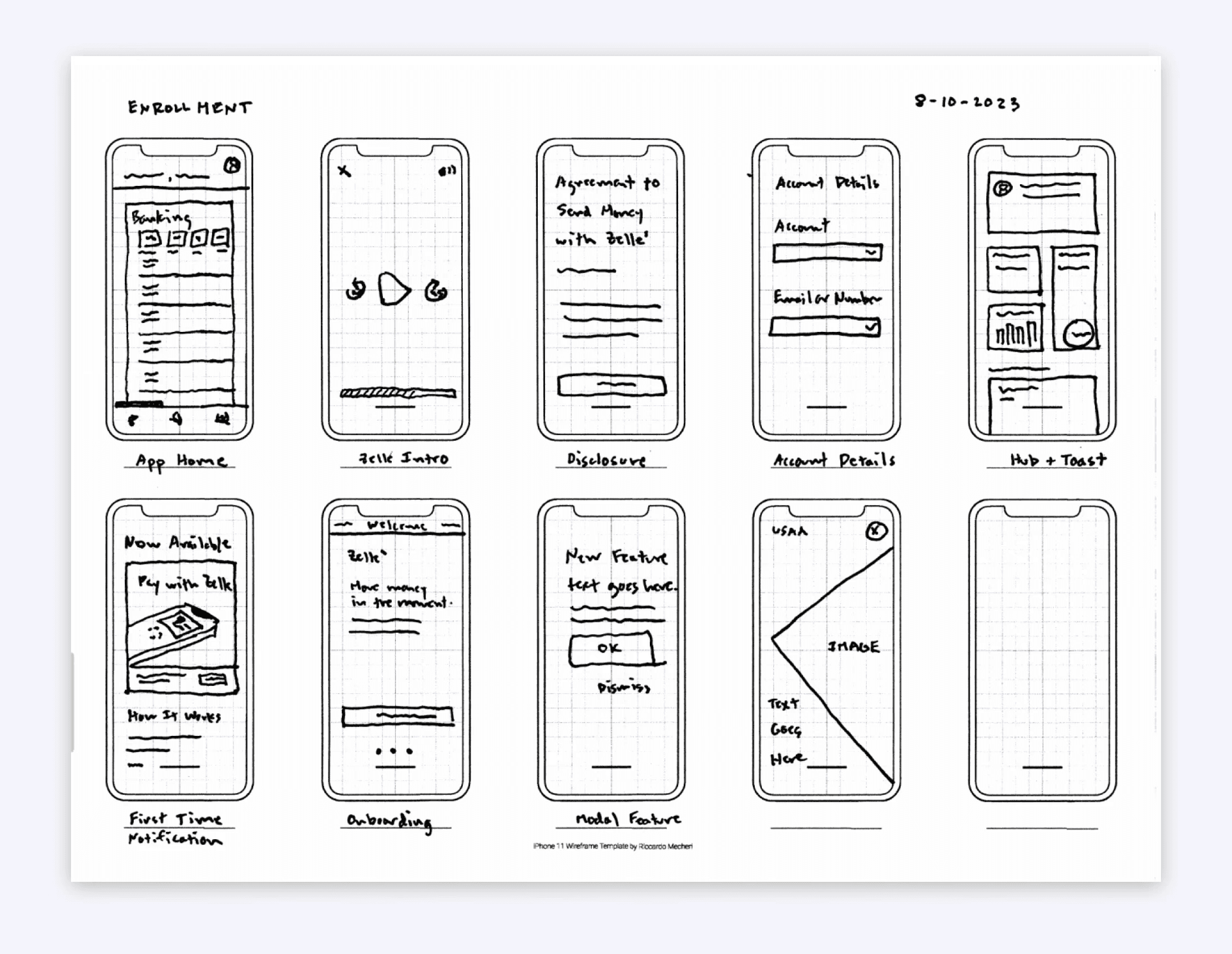
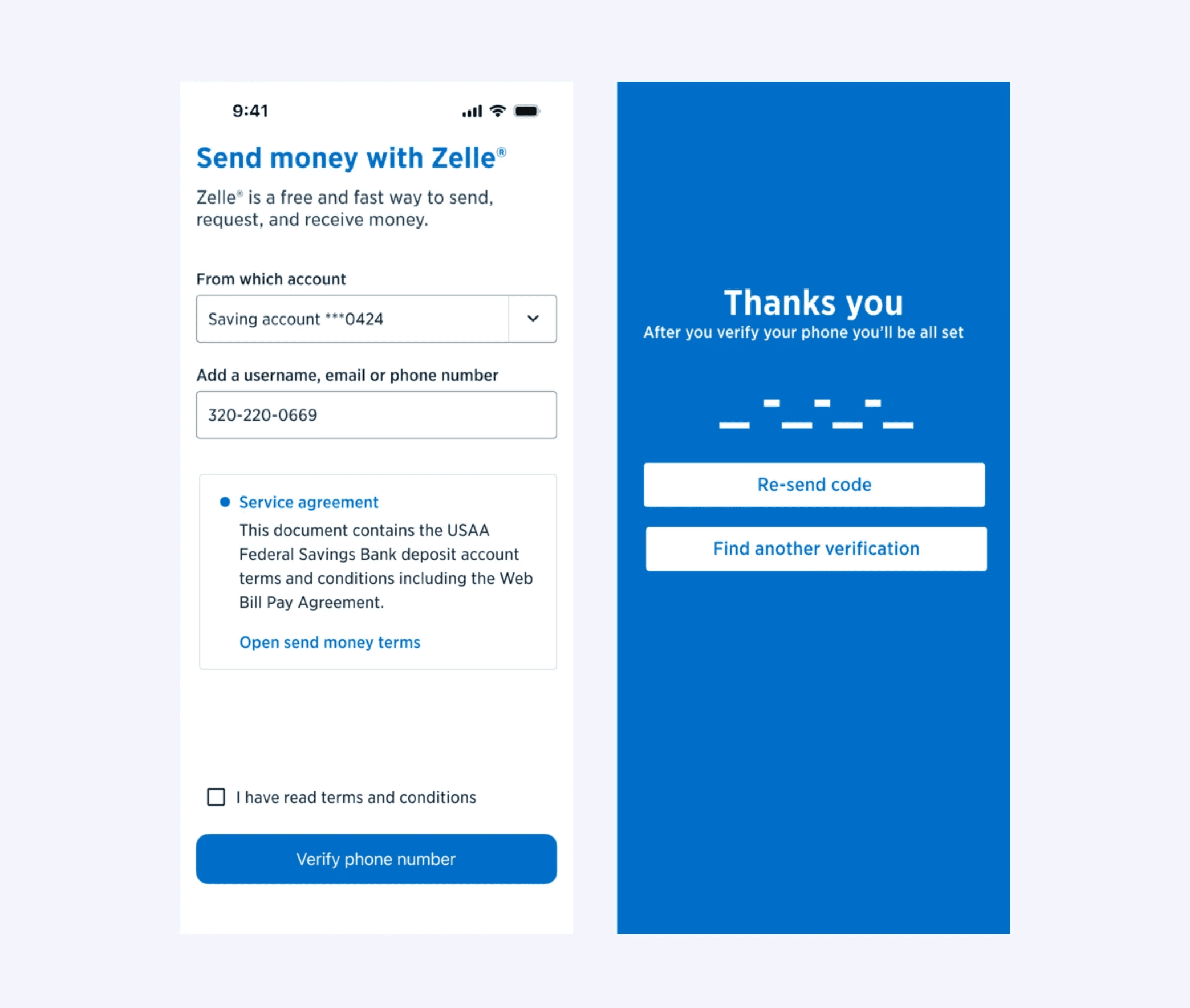
I led design for the introduction and enrollment experience as part of a multi-year transformation effort spanning Product, Engineering, Risk, Legal, and Operations. Rather than treating the work as a narrow compliance project, I helped reposition it as an opportunity to modernize Zelle’s most fragile moments, improve member understanding, and create a more scalable foundation for future network changes.
The resulting experience increased enrollment completion by 20%, improved Zelle MSAT, reduced confusion around enrollment status, and contributed to bringing USAA back into compliance.
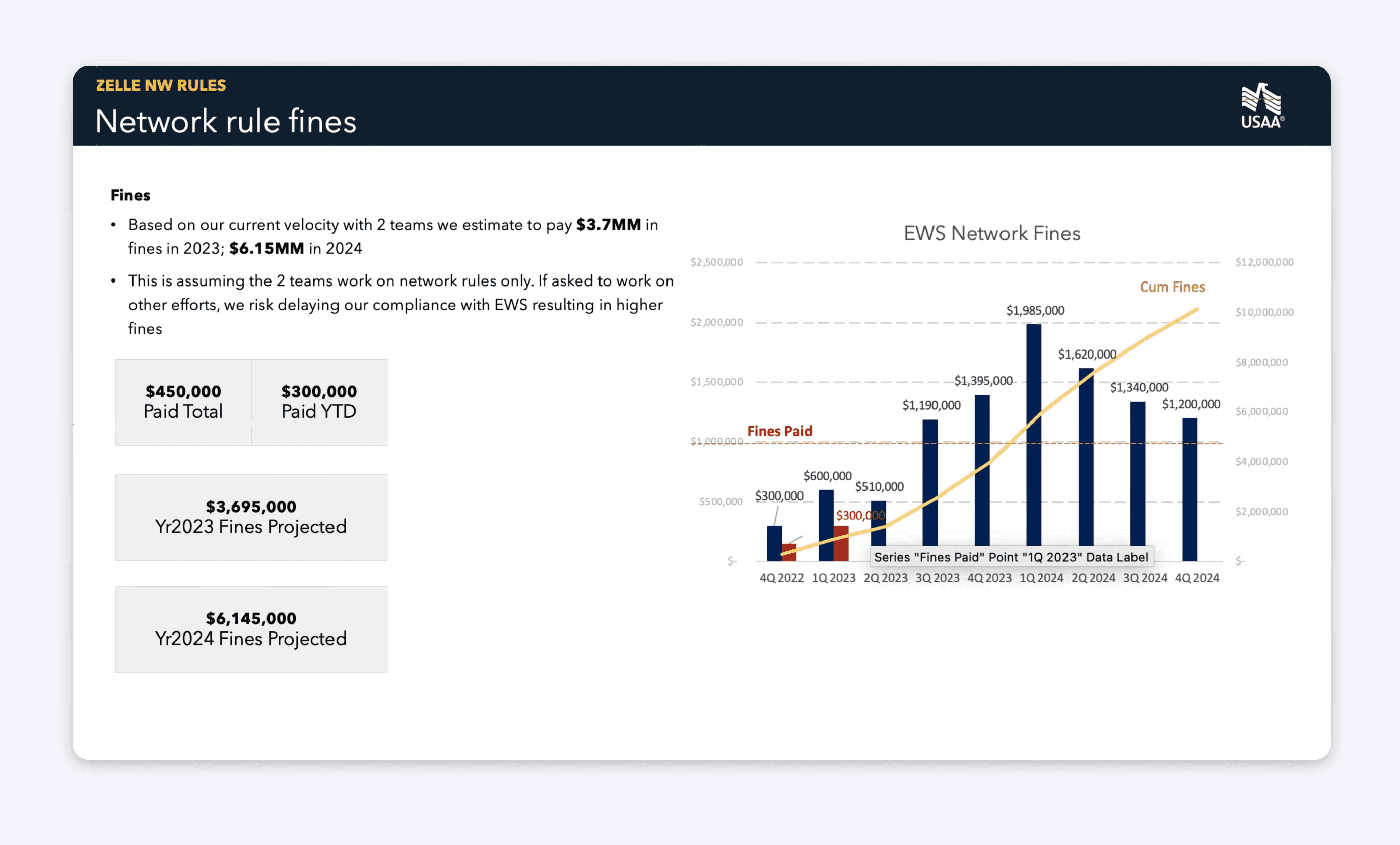
Figure 1. Internal view of projected Zelle network rule fines used to frame the urgency and keep partners aligned on why compliance and UX updates needed to move together.
Context & Challenge
Zelle had become both a compliance problem and a trust problem.
USAA was behind on newly enforced Zelle network requirements, creating millions of dollars in recurring fines and increasing pressure from risk and legal teams. Simultaneously, Zelle MSAT was declining and member feedback showed that the experience was breaking down at the earliest and most important moments.
Members often did not understand what Zelle was, why they should use it, or whether they could trust it. Enrollment was long, fragmented, and particularly fragile for members overseas because of two-factor authentication requirements and U.S.-only phone numbers.
These issues reinforced one another: poor understanding reduced enrollment, enrollment failures created support calls, and unclear confirmation states left members believing they were enrolled when they were not.
Why This Was Hard
The work sat at the intersection of compliance requirements, technical constraints, and member trust, three systems with different owners, different incentives, and different definitions of "done."
We had fixed network requirements, existing fines, legacy enrollment architecture, and limited ability to change the underlying system without risking compliance deadlines. At the same time, the experience needed to work for an unusually wide range of members, including older members with low digital confidence and active-duty military stationed overseas, without increasing implementation risk.
The challenge was not simply to redesign a flow. It was to identify the smallest set of changes that could improve understanding, increase completion, and still fit within a highly constrained system, while keeping three teams aligned on why that mattered.
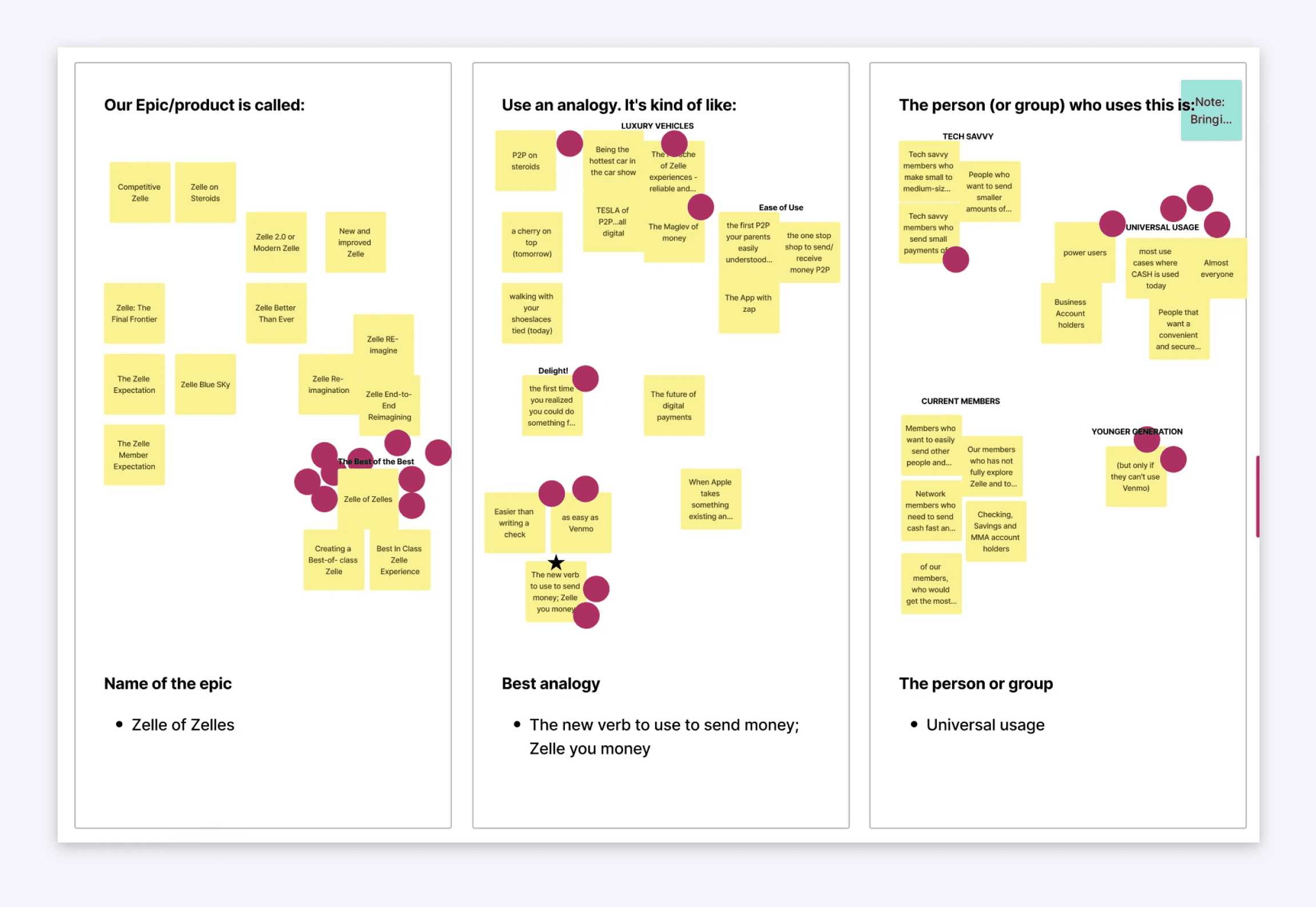
Figure 3. Workshop snippet to get everyone in aligned
Strategy & Leadership Approach
To make a plan to address the shortcomings, business and development had begun building out a multi-year roadmap.
I helped define the multi-year roadmap and positioned the intro and enrollment redesign as the highest-leverage opportunity to both improve member trust and satisfy regulatory requirements. The goal wasn't to check a compliance box and move on, it was to use the forced touchpoint as a platform for something more durable.
I facilitated a series of workshops across Product, Risk, Operations, Engineering, and Design to consolidate multiple disconnected Zelle initiatives into a single product vision we called "Zelle of Zelles." The target state: an experience simple enough for a first-time user, trustworthy enough for a hesitant retiree, and reliable enough for a military family overseas.
"If we have to touch Zelle anyway how do we turn this into an opportunity, not just a compliance project?"
I then sequenced the roadmap deliberately: close the highest-fine compliance gaps first, create space for the experience redesign second. This let us demonstrate early wins to Risk and Legal while protecting the time needed to do the member-facing work properly.
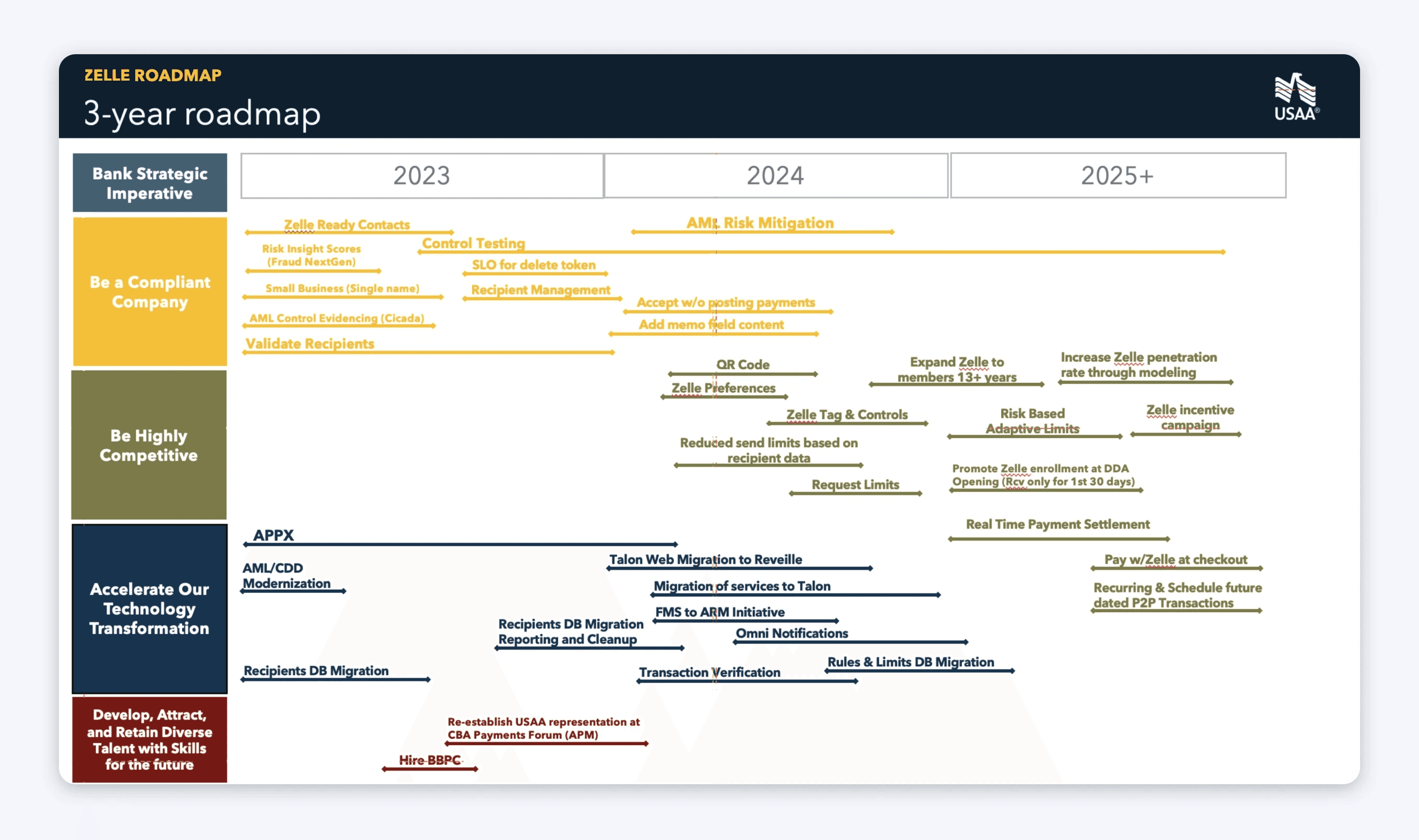
Figure 4. showcase the 3 year roadmap to partners
Research: Diagnosing the System
To identify the highest-leverage opportunities, I partnered with another designer-researcher to combine 600+ Voice of Member comments, Adobe Analytics drop-off data, and USAA's strategic member segmentation into a single diagnostic view of the enrollment experience.
What emerged was not a list of UI problems — it was a picture of a system failing at the conceptual level. The data showed roughly 50% enrollment drop-off, but the pattern underneath was consistent:
2FA failures preventing members from completing setup
US-only phone number requirements locking out military families stationed abroad
A multi-step flow that exhausted members before they finished, often because they didn't understand why each step was necessary
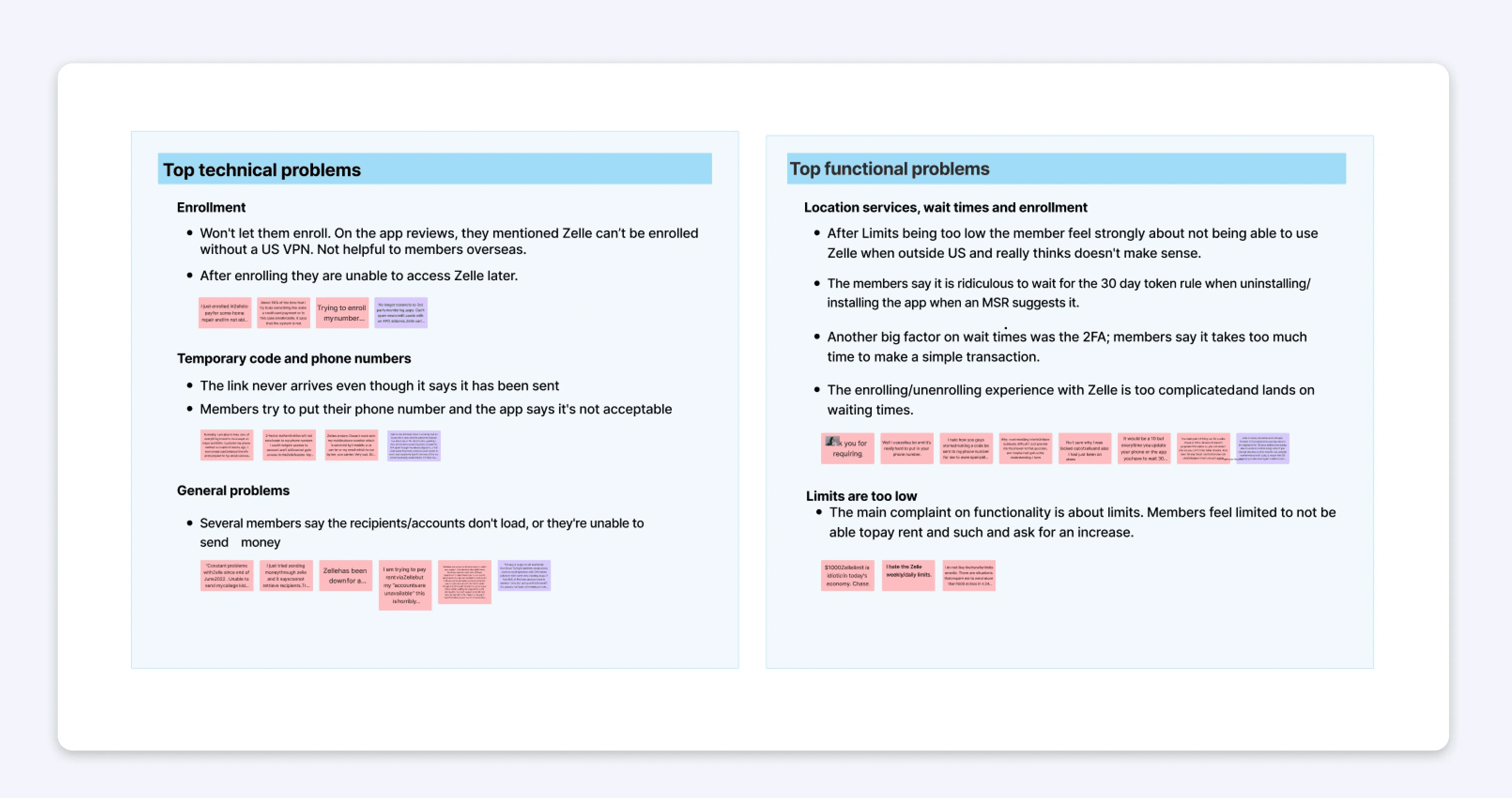
Figure 5. Synthesis of 600+ VOM comments into technical, functional, and experiential issues , used in workshops to separate "fix the plumbing" problems from opportunities to rethink the experience.
More importantly, overlaying USAA's strategic member segments revealed that one of our key groups, "Loyal Retirees," often didn't understand what Zelle was or why they should trust it at all.
This was a critical finding: no amount of UI polish would improve enrollment until we first addressed understanding
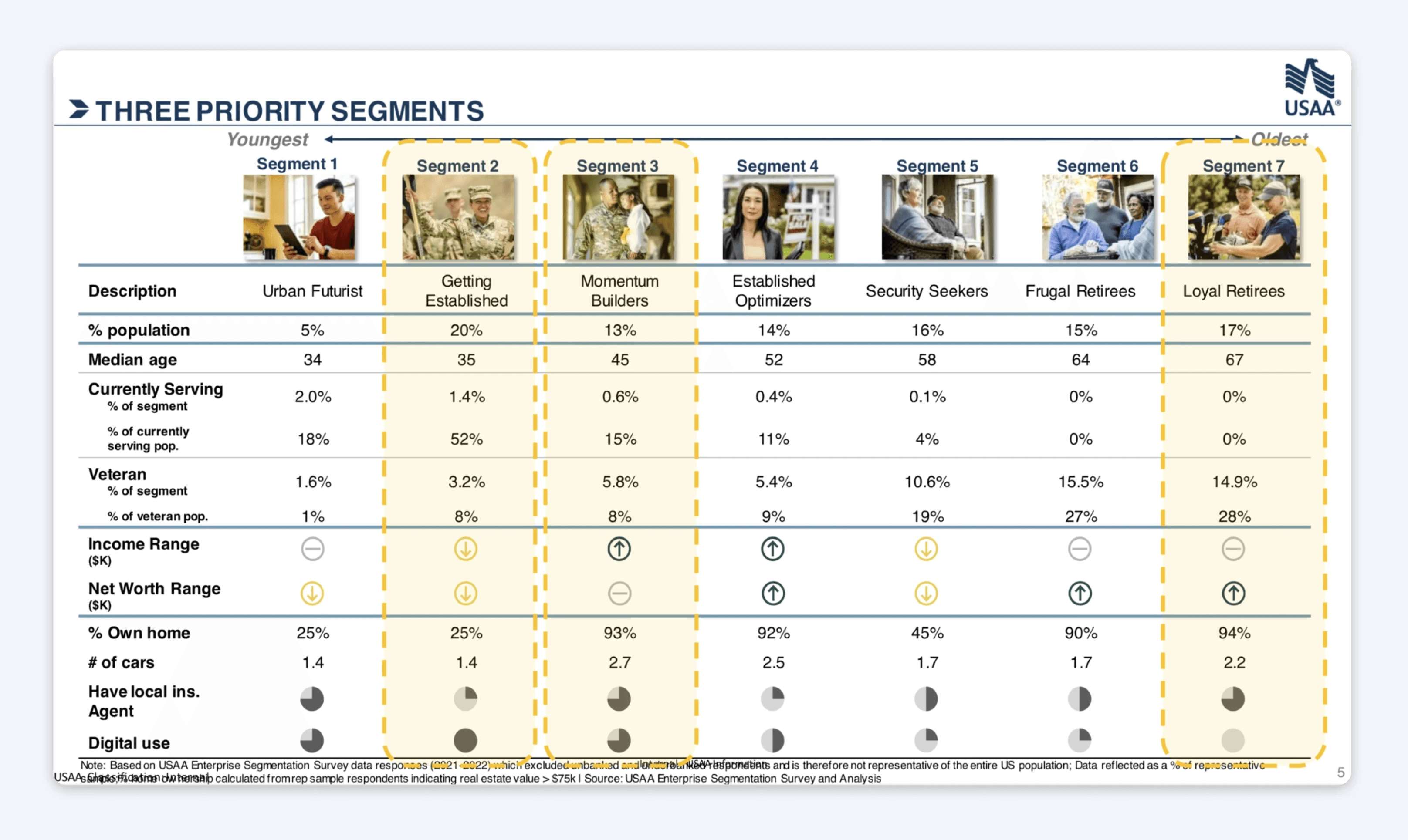
Figure 6. Internal segmentation view highlighting "Loyal Retirees" a high-value segment with low Zelle comprehension and disproportionate drop-off risk.
I also led a competitive analysis across major banks and drew pattern inspiration entirely outside banking, companies like Nike, Spotify, and onboarding-forward apps, to push the team's reference point beyond "table stakes" and toward something genuinely engaging for a first-time user.
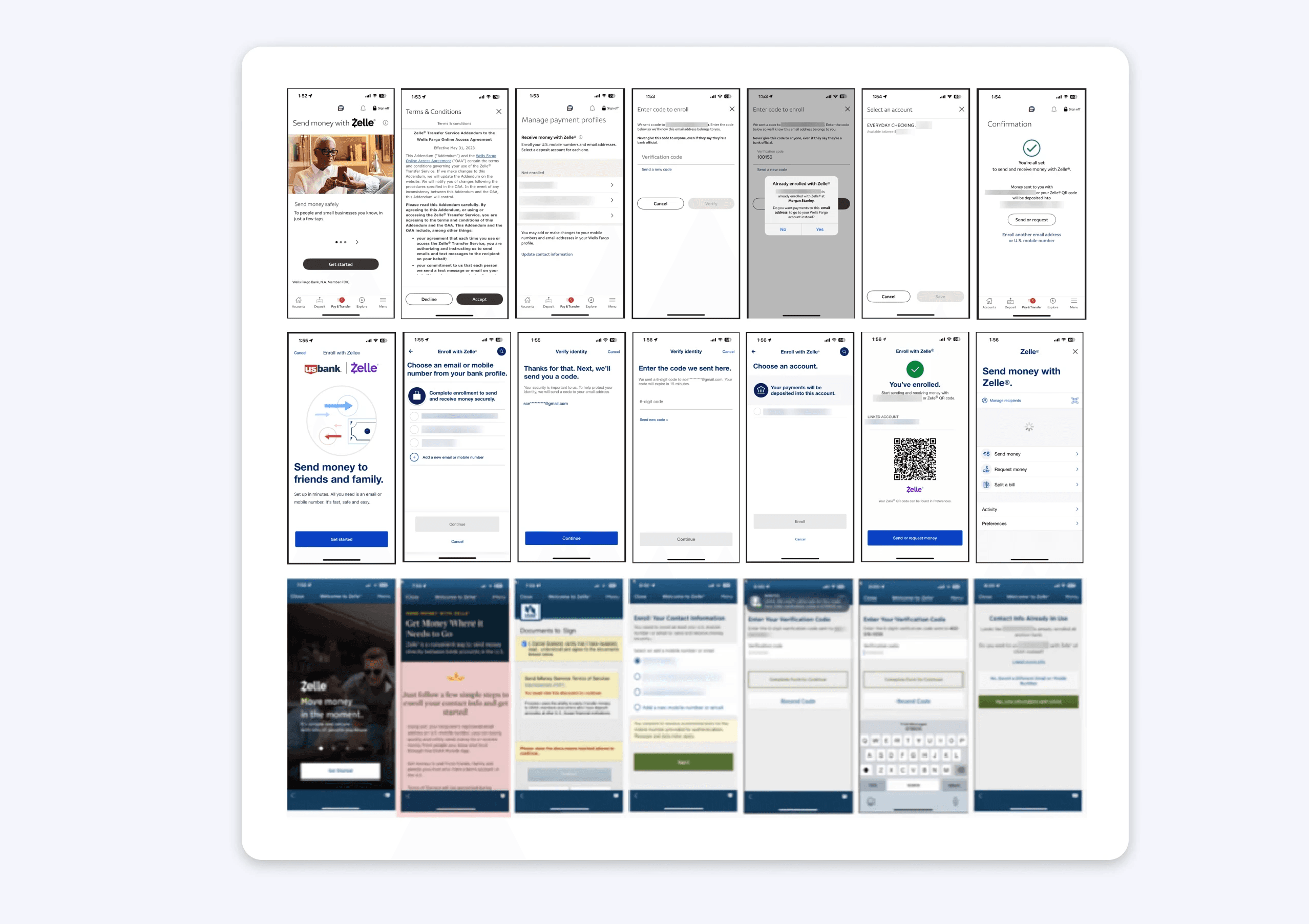
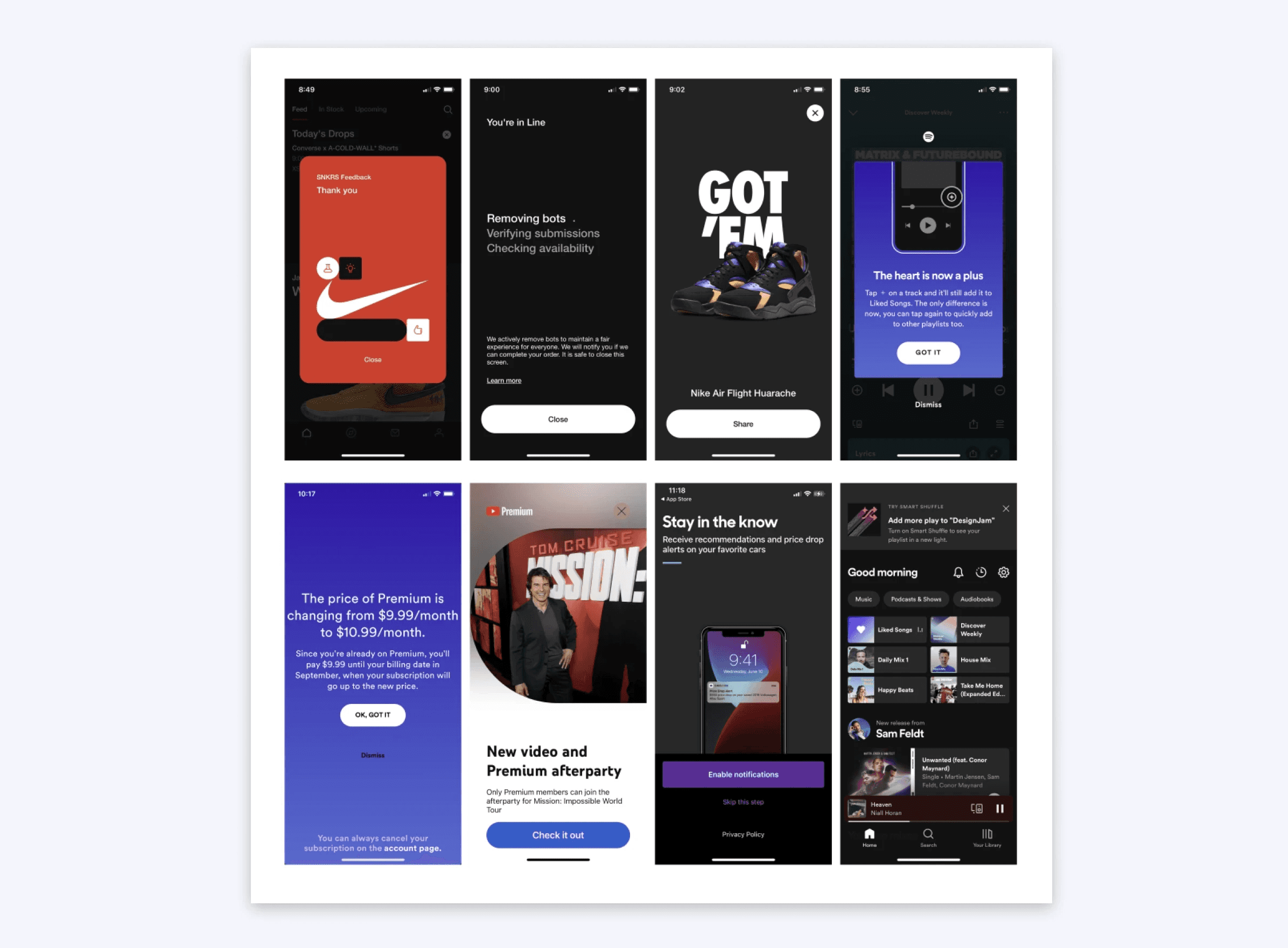
Two areas of focus, two design explorations
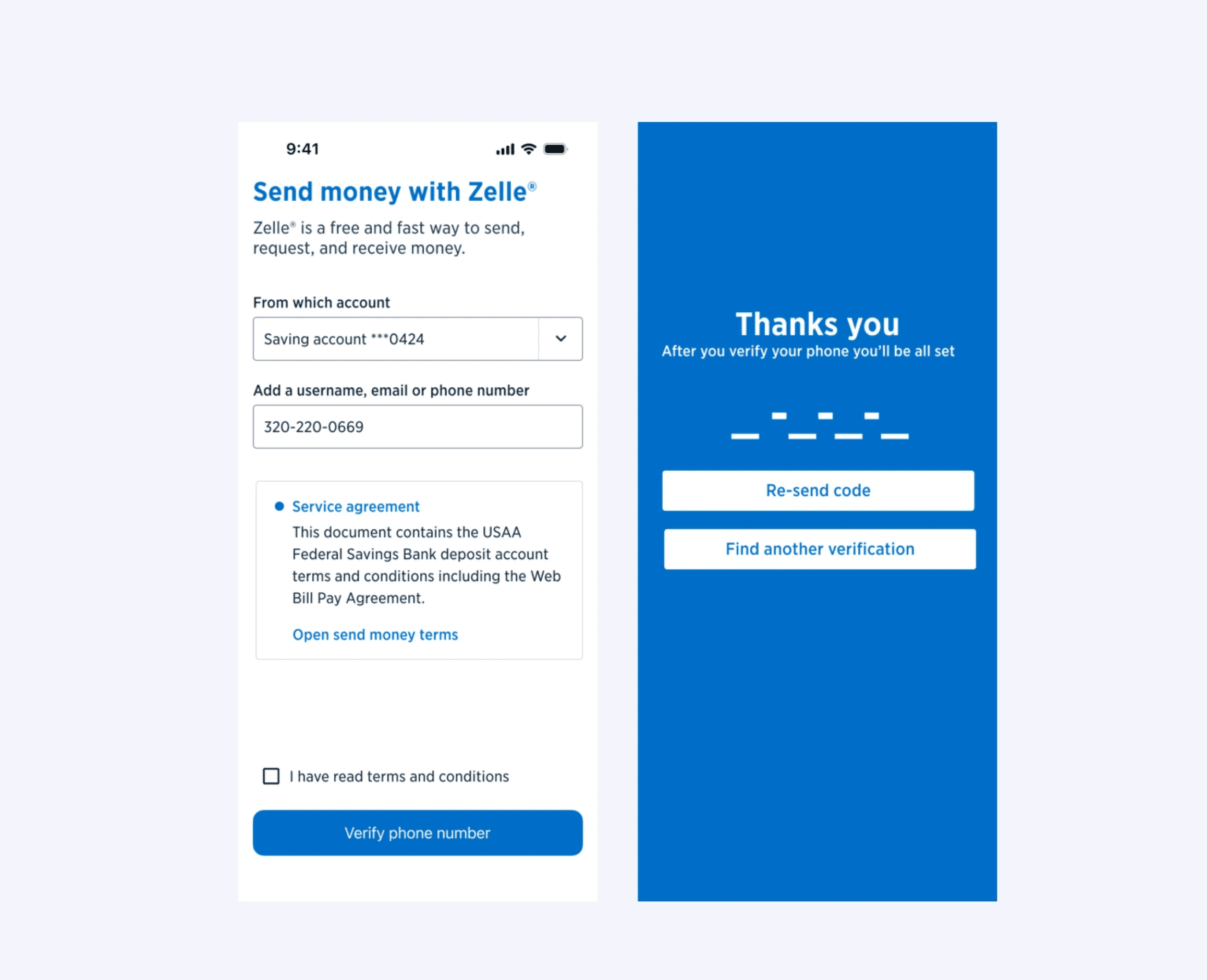
Based on the diagnosis, I focused my exploration on the two weakest links: intro and enrollment. Compliance work around QR codes and Zelle tags meant we had to touch the enrollment stack anyway, so rather than bolt new steps onto a broken foundation, I pushed for a full rethink of the flow.
Enrollment
I explored two directions in parallel intentionally:
An ambitious "one-click" enrollment concept that dramatically simplified the process. This was designed to show the team what "great" looked like and to anchor the conversation above the lowest feasible bar.
A pragmatic condensed flow that combined multiple existing steps into a hub-and-spoke pattern, aligned to current technical and regulatory constraints.
Without showing the ceiling, it's hard to justify pushing past the floor. The aspirational concept did its job, it raised the standard of what we were trying to achieve, and the pragmatic path was then refined through testing with that bar in mind.
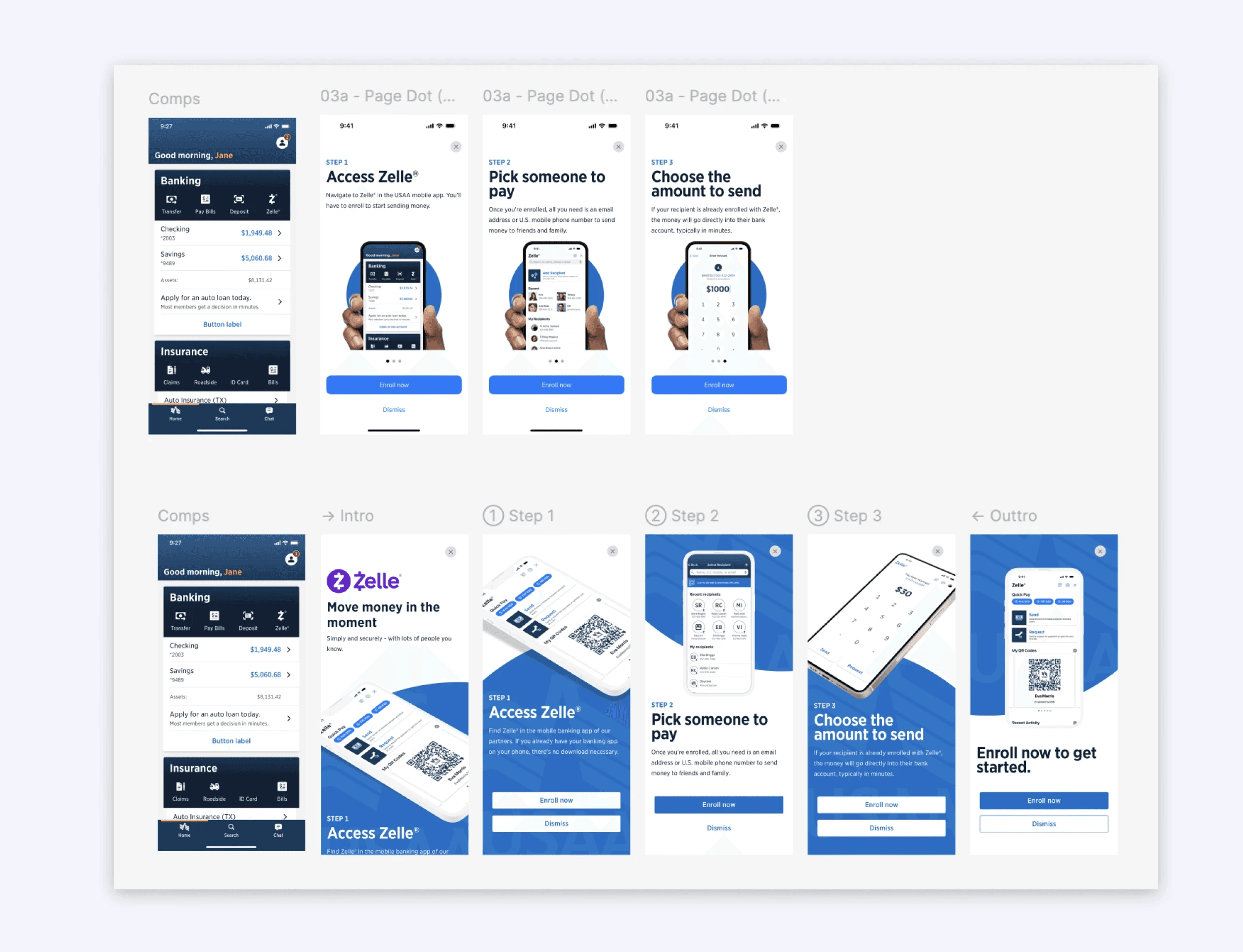
Introduction
A conservative version built with existing design system components has low implementation risk and a straightforward handoff.

A visually rich, story-driven version designed specifically for hesitant or older members, built to explain Zelle in plain language before asking anyone to commit.
Positive feedback
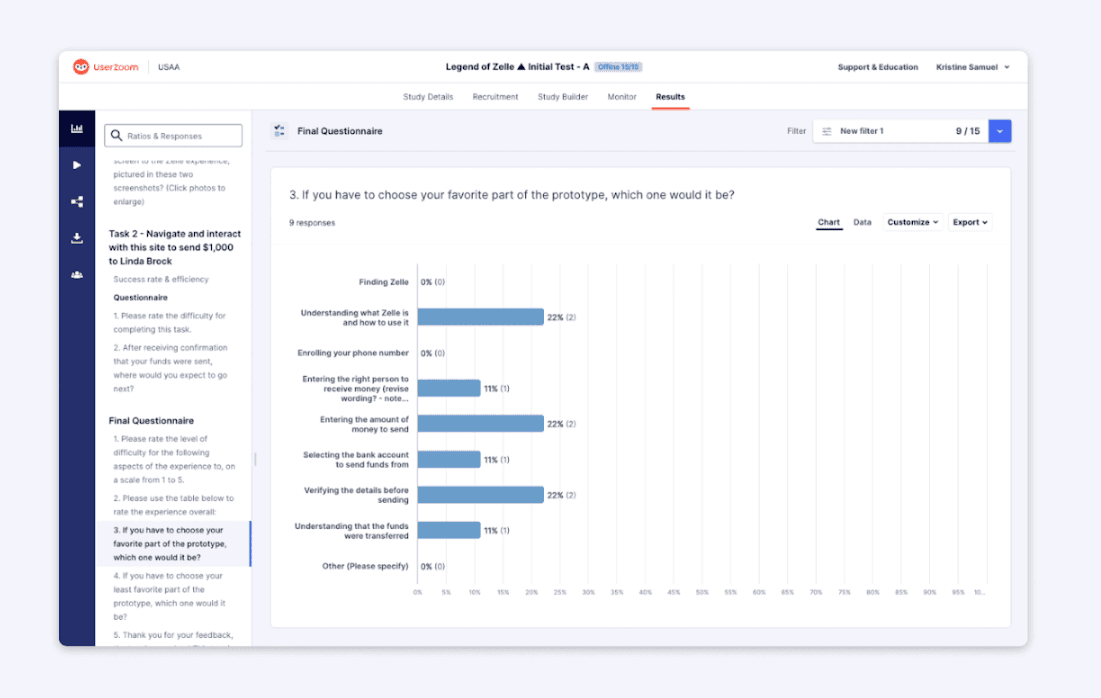
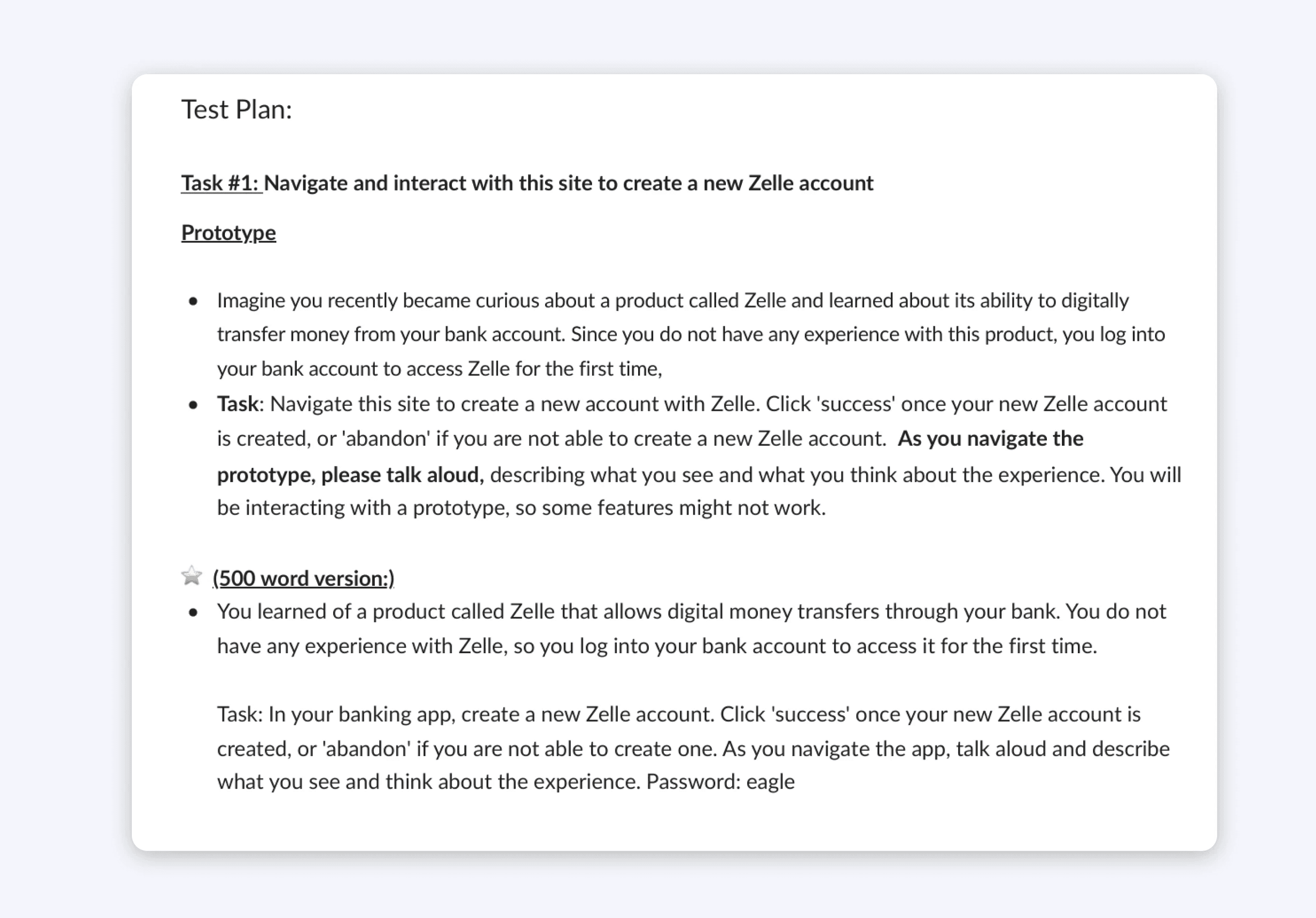
We ran remote usability tests in which participants were randomly assigned to one of the intro concepts and then walked through the updated enrollment flow. We measured task success, time on task, observed hesitation points, and post-task confidence ratings.
Key questions:
Are there any catastrophic failure points that block completion?
Which intro experience produces more clarity and trust, not just visual preference?
Where do people hesitate or skip critical information in enrollment?
Our findings
All participants completed enrollment, and the overall structure was sound.
The conservative intro scored higher on ease of use; the story-driven version generated more engagement. This tension was informative, not a failure; it told us that members wanted clarity more than immersion.
Several participants immediately tapped the primary CTA and skipped key fields; the visual hierarchy in the enrollment flow still wasn't strong enough.
These findings directly shaped the final solution: simplify the intro and sharpen the enrollment hierarchy.

Impact
RESULTS — FIRST SIX MONTHS POST-LAUNCH
→ Enrollment completion increased by 20% for members who entered the flow
→ Zelle MSAT improved by approximately 20% for that cohort
→ Reduction in "I thought I was already enrolled" complaints from early servicing feedback
→ USAA returned to compliance with Zelle network requirements
My Role & What I Learned
This project required operating beyond the traditional boundaries of a design role. Building alignment across teams with competing priorities: Risk optimizing for loss avoidance, Engineering managing technical debt, Product managing timelines, it meant constantly translating between vocabularies and keeping the member experience visible in conversations where it was easy to lose sight of.
What This Work Required
Facilitating alignment across five different functions: Product, Risk, Operations, Engineering, and Design. Turning a compliance project into a shared product vision that everyone could see themselves in.
Using data as the common language. Walking partners through member complaints, drop-off rates, and MSAT trends shifted conversations from "I think" to "the data is telling us." Trade-offs became easier to make once the member cost of inaction was quantified.
Holding the vision through sustained organizational friction reorgs, layoffs, and shifting regulatory timelines slowed progress repeatedly. What kept the work moving was a team culture that challenged "this is how we've always done it" and kept the "Zelle of Zelles" standard visible even when the path wasn't straight.
This project reinforced one of the biggest lessons of my career: the highest-impact design work rarely starts with "How do we make this prettier?" It starts with understanding the business risk, the member confusion, and the organizational friction underneath and then using design to align all three.
Designed in
© Copyright 2026