SENIOR PRODUCT DESIGNER
Designing experiences that reduce friction and turn complex systems into something real people can actually use.
I blend UX, product strategy, and data analytics to shape experiences that work for both the business and the humans on the other side of the screen.
TAKE A LOOK AT
My selected work

Turning confusion into clarity for transaction declines
I guided a data-driven service design effort to improve credit and debit card declines, turning 40M+ monthly declines into a clear story, journey map, and blueprint that aligned fraud, cards, and digital teams on NPS-driven fixes.
ROLE
YEAR
Lead Product designer
2025

Regulation gaps provided an opportunity to refresh.
I led design on USAA’s Zelle experience, running cross-functional workshops, pushing industry best practices, and using my Zelle SME background to guide a best-in-class redesign.
ROLE
YEAR
Lead Product designer
2023-25

Preventing “Why Didn’t This Go Through?” Calls
I redesigned USAA’s scheduled transactions flow to make future-dated money movements easier to set up, easier to trust, and less likely to result in service calls and poor member satisfaction.
ROLE
YEAR
Lead Product designer
2024
WHAT TO KNOWN
About me
I’m Ana Rosa, a Senior Product & UX Designer with a fintech backbone and a growing specialization in data analytics. Most of my work lives in high-stakes money movement and servicing—Zelle, card declines, transfers, scheduled payments—where the systems are messy, the rules are strict, and the humans on the other side are often stressed. I sit between design, data, and operations to make those moments clearer, calmer, and easier to fix.
What I’m good at
1. Turning messy systems into clear journeys
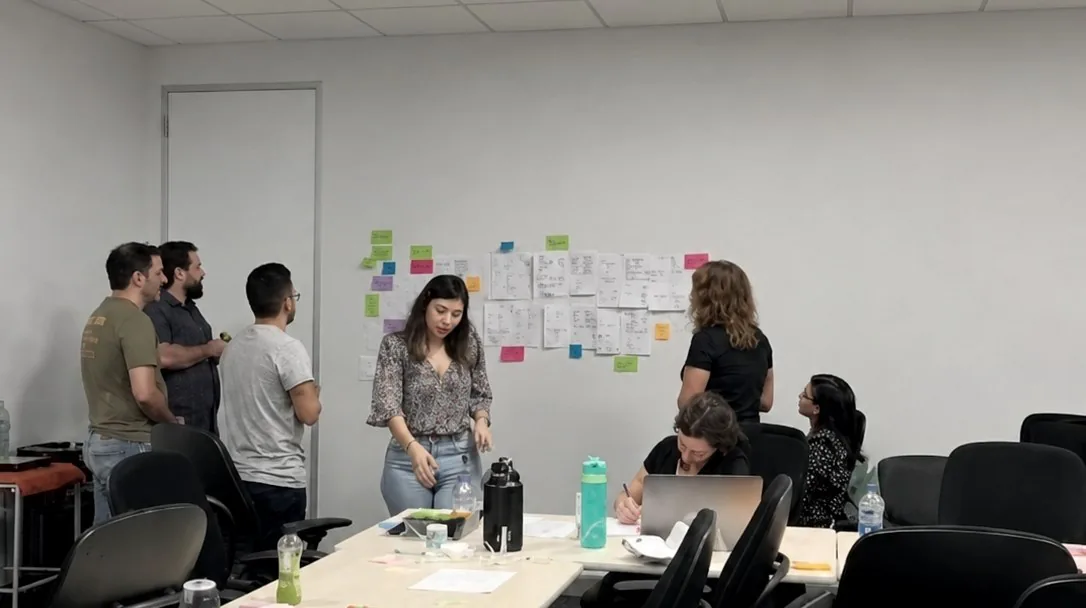
I’m comfortable inside complex environments: legacy platforms, fragmented policies, multiple product owners, and “half-owned” experiences. I use service blueprints, journey maps, and evidence from data and complaints to build a shared picture of reality, then design flows that make sense both to members and to the organization that has to run them.
2. Blending design with data
I don’t treat data as a dashboard you check at the end. I pull in decline codes, complaints, NPS trends, and experiment results to decide which problems to solve, in what order, and how we’ll know if it worked. I’m currently pursuing an M.S. in Data Analytics to deepen that skill, so my design decisions are grounded in more than intuition or “what feels right in the room.”
3. Getting alignment in the room
I’ve facilitated working sessions with engineers, product owners, compliance, risk, and operations—often around highly regulated, high-risk flows. My strength is translating between “experience,” “ops,” and “data”, so we can make trade-offs explicitly instead of arguing from our own corners. The outcome is not just nicer screens, but a shared plan teams can actually execute.
How I work
My process is straightforward and repeatable:
Clarify the problem – What’s actually broken? For whom? How do we know?
Ground it in evidence – Member stories, complaints, logs, and metrics, not just opinions.
Map the system – Where experience, tooling, and policy don’t line up.
Design & test – From low-fi flows and content to higher-fidelity prototypes with real constraints.
Tell the story – Frame trade-offs, recommendations, and measurable outcomes so leaders can make decisions.
Beyond work
I’m a parent of two girls, a bit obsessed with how people learn and make decisions, and I split my time between designing products, studying data, and planning the next family adventure.
TAKE A LOOK AT
My Reviews
Designed in
© Copyright 2026